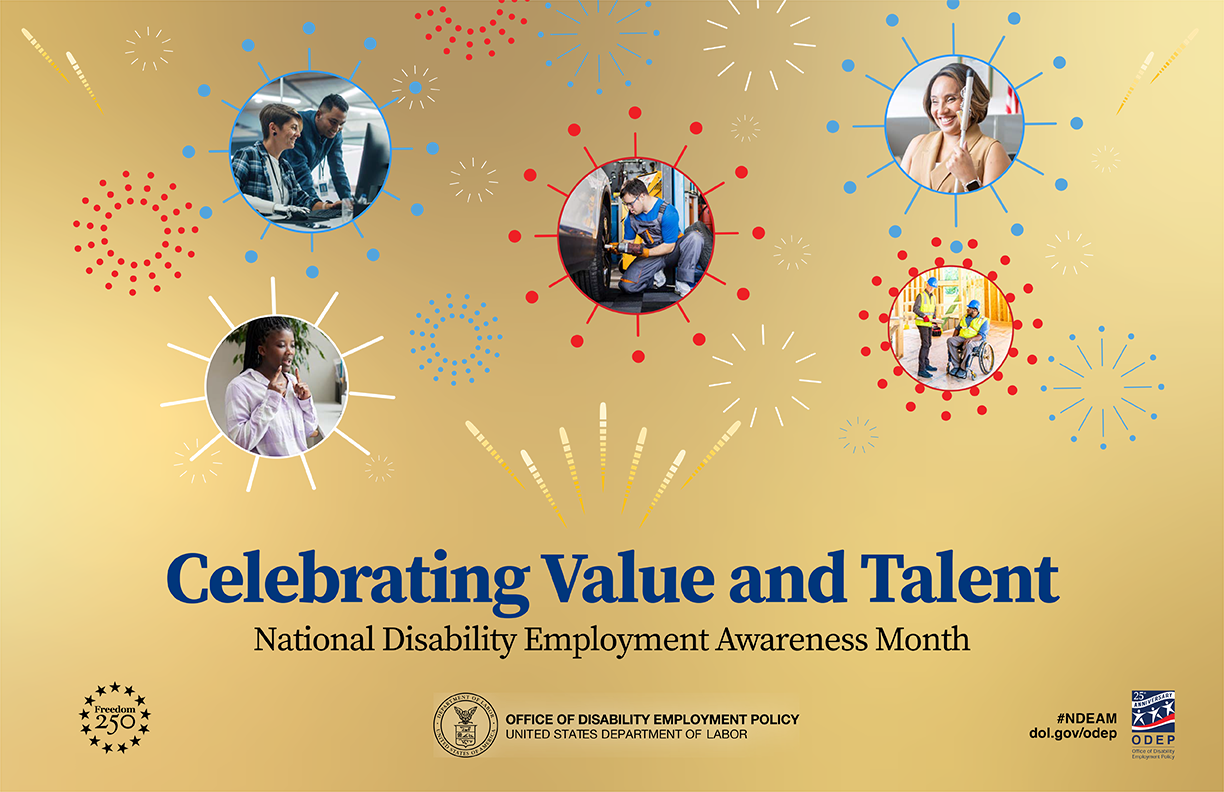
October is National Disability Employment Awareness Month (NDEAM), a time to recognize the contributions of workers with disabilities and promote accessible workplaces. It’s also a good reminder that accessibility isn’t just the responsibility of a few dedicated people. It’s everyone’s responsibility.
More often than not, organizations treat accessibility as a specialized skill set owned by a handful of experts, while everyone else works around it. But that model doesn’t scale. No matter how knowledgeable your accessibility team is, they can’t be in every meeting, review every purchase, write every piece of content, or influence every design decision.
Accessibility isn’t created by a handful of experts. It’s influenced by hundreds of everyday decisions made across an organization, from the technology you buy to the content you create to the experiences you design.
The goal isn’t to turn everyone into an accessibility expert. It’s to build enough shared insight that people recognize when their decisions have accessibility implications, and the knowledge to know what to do next.
Accessibility Awareness at Scale is What Changes an Organization
Think about it.
Designers choose color and layout, influencing whether color contrast is sufficient and interfaces are easy to navigate. Light gray text on white looks elegant in a mockup, but it's unreadable for many people with low vision.
Developers determine whether code works with assistive technology. They decide whether a custom dropdown works with a keyboard. If it doesn't, someone who can't use a mouse is denied access to the webpage.
Marketers and content creators shape whether messages are clear, readable, and understandable. They write the ALT text, captions, and headlines. A video without captions excludes people who are deaf or hard of hearing, as well as the metro commuter watching with the sound off.
Human Resources teams influence job applications, employee communications, and training materials. They shape the first impression. If an online application process does not work with screen readers, you've denied access based on a disability.
Leadership determines whether accessibility gets the resources, accountability, and attention it deserves. When accessibility is a budget line and not a company value, it's the first thing to get cut.
Two powerful roles rarely get mentioned in the accessibility conversation. Those roles are procurement and internal audit.
Procurement decides what software, platforms, and vendors the whole company uses. When you buy an inaccessible student system, you deny students with disabilities access to the information and services provided by that system. And your developers can’t fix what they don’t own.
The solution is simple. Require an Accessibility Conformance Report (ACR) in every RFP, and treat a vague answer as a red flag.
Treating procurement as the first accessibility checkpoint will reduce risk, improve digital experiences, and guarantee accessibility is built into technology investments from the very beginning.
Internal audit can ask whether accessibility is built into organizational processes. Is there a documented accommodation procedure? Are vendor accessibility claims verified or taken on faith? Audit already checks for controls in security, privacy, and finance, so why not accessibility?
Adding accessibility to the internal audit process makes it something leadership has to track. It also surfaces legal and reputational risk before a complaint does.
Start Small
Building accessibility into organizational culture doesn’t require changing your entire organization overnight. Start small, build accessibility into the work you’re already doing, learn from what you do, and use each step to build the knowledge, confidence, and momentum to take the next one.
Start with these:
- Add one accessibility requirement to your project requirement document.
- Add one accessibility question in your design reviews, code reviews, and content checklists.
- Add an accessibility requirement to your next RFP.
- Ask internal audit to include the accommodation process in its next review.
- And when you’re ready, embed an accessibility expert directly into each team while the work is happening.
Closing the Gap
Every role has an impact. Every decision can remove a barrier or create one. When everyone understands that impact, it becomes part of how work gets done.
Closing the accessibility gap means building practical accessibility knowledge into the work people already do. Provide teams the guidance and tools they need and make accessibility part of onboarding, professional development, and established workflows. In other words, make accessibility a shared responsibility.
Culture doesn’t shift because of a single accessibility initiative. It shifts when accessibility becomes part of how an organization thinks, makes decisions, and works, one intentional step at a time. Only then can organizations build more inclusive digital experiences from the start.
This NDEAM, let’s think beyond compliance. Let’s build workplaces where accessibility awareness and knowledge are part of how we all work, not just something a few people know.
Resources
A human author creates the DubBlog posts. The AI tools Gemini and ChatGPT are sometimes used to brainstorm subject ideas, generate blog post outlines, and rephrase certain portions of the content. Our marketing team carefully reviews all final drafts for accuracy and authenticity. The opinions and perspectives expressed remain the sole responsibility of the human author.
