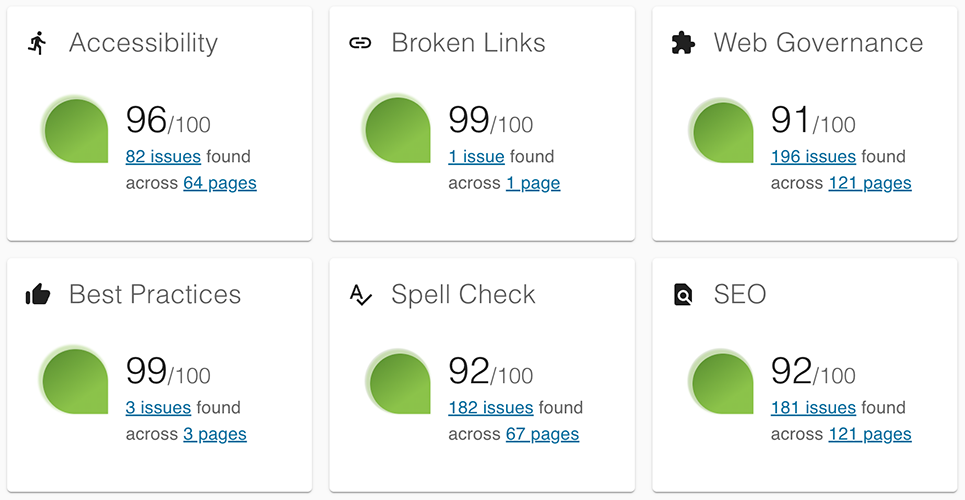
Have you ever looked at the dashboard of an automated testing tool and thought, Why is accessibility sitting next to SEO and broken links? At first, accessibility might seem to belong in a totally different category. More legal, maybe more technical.
There’s actually a very good reason automated tools group accessibility alongside things like SEO, spelling errors, broken links, and uptime. Automated tools, like DubBot, are built to monitor and protect your overall website quality. Each of these categories affects how real people experience your website.
In other words, accessibility shows up next to SEO, spelling, and broken links because that’s where it belongs, not as an afterthought, but as a core signal of whether your site is actually working for the people it’s supposed to serve.
None of these categories exists in isolation. A site can be technically up and running and still be unusable. It can rank well in SEO and still frustrate the people it’s meant to serve. Your website can be visually polished while quietly excluding users, making it anything but fully functional.
Automated tools also reflect how modern websites actually get built and maintained. Content changes constantly. New pages get published. Templates get tweaked. A well-intentioned editor uploads a PDF. Someone adds a form field. Most accessibility regressions come from everyday updates, not from big redesigns. The same is true for broken links, SEO issues, and spelling mistakes.
Accessibility belongs on the same dashboard as SEO, spelling, broken links, and uptime. It’s part of the picture of the site's overall quality. Each of these categories tells you something important about how well your site is actually serving its users. Just like broken links interrupt a visitor’s journey or poor SEO keeps content from being discovered, accessibility barriers prevent people from engaging with your site.
Treating accessibility as part of overall site quality ensures that your website remains not only up and running smoothly and discoverable, but is genuinely usable for the people it’s meant to serve.
Resources
- Actionable SEO and Accessibility Best Practices
- Website Monitoring: What, Why, and Best Practices
- Beyond Manual Audits: How Automation Strengthens Accessibility
A human author creates the DubBlog posts. The AI tools Gemini and ChatGPT are sometimes used to brainstorm subject ideas, generate blog post outlines, and rephrase certain portions of the content. Our marketing team carefully reviews all final drafts for accuracy and authenticity. The opinions and perspectives expressed remain the sole responsibility of the human author.
